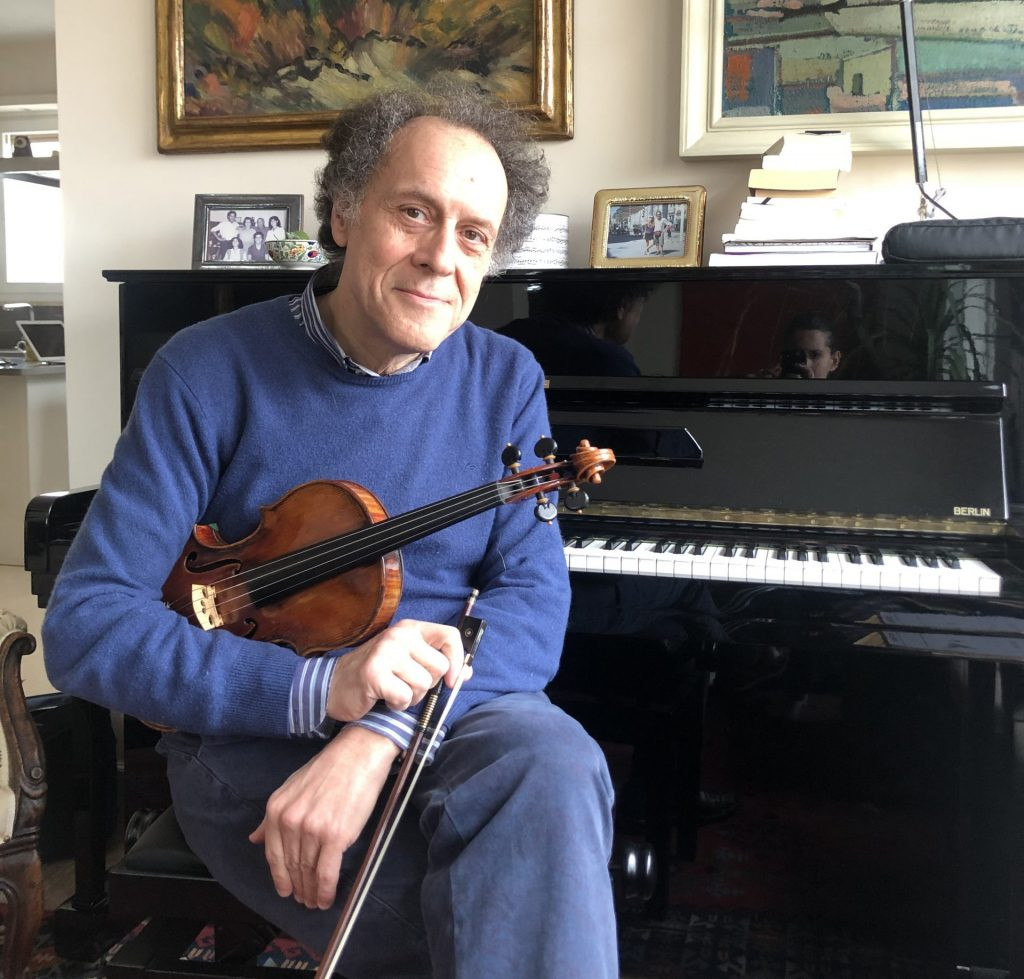
Carlo Fabiano
Carlo Fabiano has always been the soul of the Orchestra da Camera di Mantova.
Founder, leader and artistic director
He founded the orchestra in 1981 while still very young and fresh from his studies. Together with the ensemble, over more than forty years, he has toured the world, performing in an endless list of theatres, concert seasons, and festivals throughout Europe, the United States, Central and South America, North Africa, and Asia.
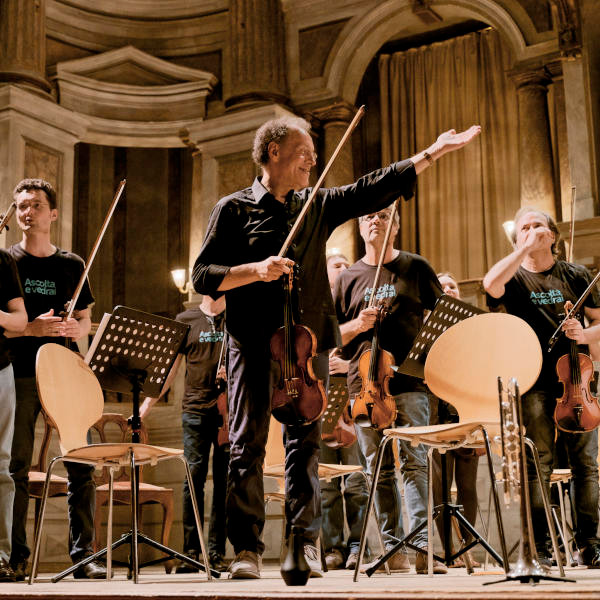
With the Orchestra da Camera di Mantova, he serves as leader and violin director, and is also the artistic director of Oficina OCM, the cultural production centre that since 2018 has brought together and reshaped the many artistic activities revolving around the orchestra.
His artistic development is the result of years of work alongside many of the great figures of the international music scene. Among them, he especially recalls Vladimir Ashkenazy, Maria João Pires, Gidon Kremer, Joshua Bell, Shlomo Mintz, Viktoria Mullova, Mischa Maisky, Katia and Marielle Labèque, Kent Nagano, Steven Isserlis, Angela Hewitt, Barnabás Kelemen, Salvatore Accardo, Uto Ughi, Giuliano Carmignola, Enrico Dindo, Mario Brunello, Maria Tipo, Bruno Canino, Michele Campanella, and Andrea Lucchesini.
His collaborations with the unforgettable Astor Piazzolla, Severino Gazzelloni, Rocco Filippini, Dino Asciolla, and Aldo Ciccolini remain indelibly etched in his memory.
In both his artistic and personal development, as well as in the conception and growth of the projects he has coordinated, a decisive role has been played by his great friendships and long-standing collaborations with Umberto Benedetti Michelangeli and Alexander Lonquich.
Cultural manager
As a cultural manager, he has conceived and developed numerous multi-year thematic projects presented by prestigious concert societies in Italy and abroad. Among the most notable are the “Beethoven Project” (2002–2004), a reinterpretation of the symphonies and concertos of the Bonn master in chamber form, and “MozartFest” (2004–2007), dedicated to the sacred music of the great Salzburg composer. He also curated the complete cycle of Wolfgang Amadeus Mozart’s piano concertos, enthusiastically welcomed by numerous international concert societies, as well as a major project devoted to Joseph Haydn on the bicentenary of his death.
Long interested in the relationship between music and society, in 1993 he founded the concert season “Tempo d’Orchestra”, aimed at promoting and safeguarding musical culture in the local area, and in 2013 he created the Trame Sonore Festival, an international project of experimental musical outreach that each year brings together hundreds of musicians from around the world in Mantua and seeks to encourage new reflections on the ways classical music is presented and experienced.
Teacher
A passionate educator, Carlo Fabiano began his teaching career at the “Campiani” Conservatory, where he held the Violin Chair once occupied for many years by his teacher Franco Claudio Ferrari.
From 2010, for twelve years, he led the Chamber Music Class at the Advanced Training Courses of the Accademia Nazionale di Santa Cecilia, guiding dozens of young musicians and chamber ensembles toward professional careers. He also served on the jury for the Premio delle Arti, awarded to the finest graduates of the Italian National Conservatories. He regularly gives chamber music masterclasses at academies and conservatories.
Awards and recognition
In 1997, he received the prestigious “Franco Abbiati” Prize from Italian music critics for the artistic achievements attained with the ensemble he founded.
In December 2017, the Municipality of Mantua awarded him the civic honour “Edicola di Virgilio in oro”, recognising “the activity of citizens of Mantua who, through their work, have in any way benefited the city, either by enhancing its prestige through their personal merit or by serving its institutions with dedication.”
In 2019, the specialist magazine Classic Voice included Maestro Carlo Fabiano among the ten personalities who had most distinguished themselves that year in the promotion and dissemination of classical music.
Studies
He studied at the Mantua Conservatory, but it was only after meeting the violinist Franco Claudio Ferrari — who would later become his teacher and mentor — that he chose to make music the centre of his life. From Maestro Ferrari, of whom he is one of the very few Italian pupils, he received five years of instruction.
He later attended lessons and received guidance in Rome from Arrigo Pelliccia, while simultaneously beginning an intense professional career as concertmaster and member of numerous chamber ensembles.