Palazzo Te | Sala dei Cavalli
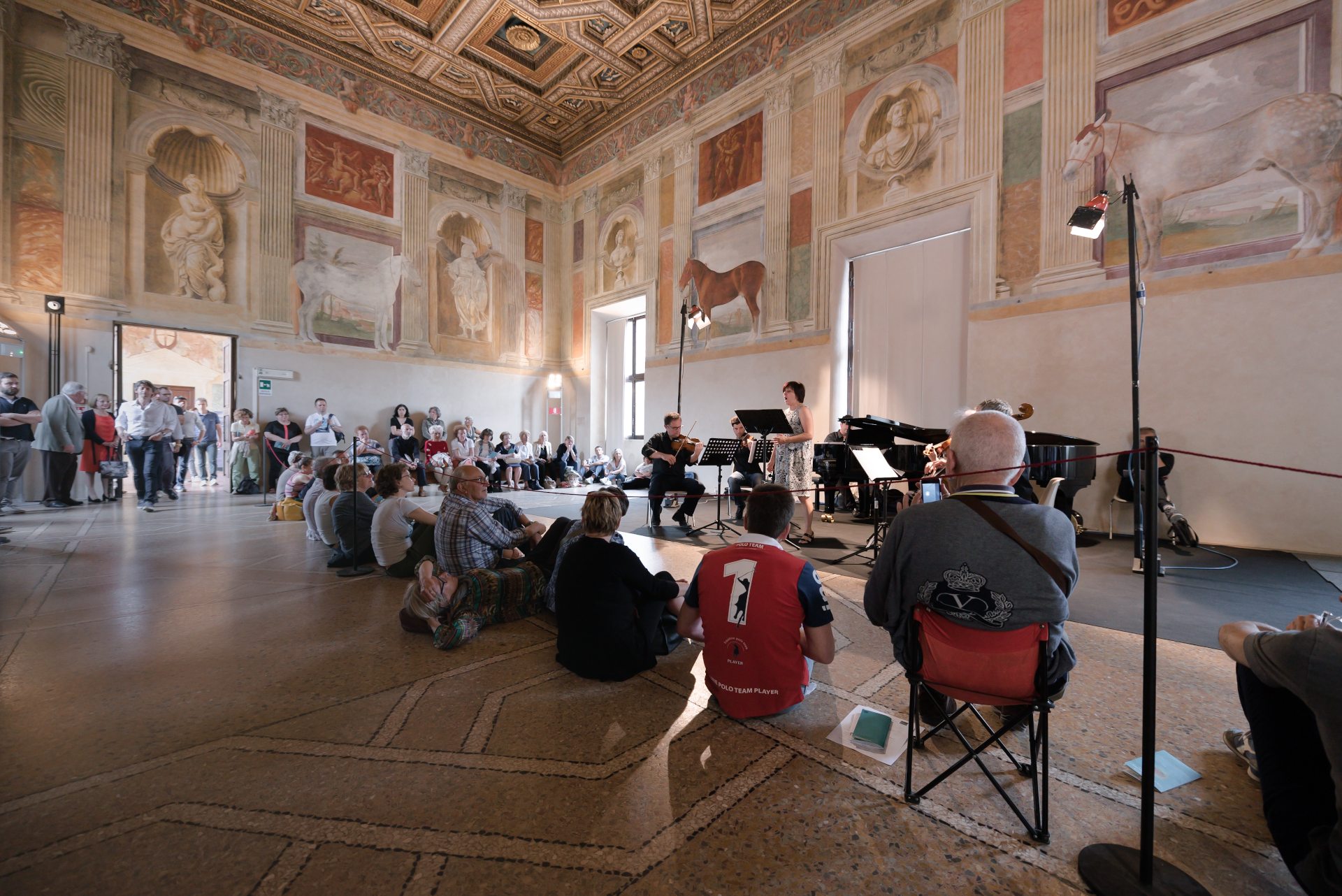
Intended for the reception of guests and the most important ceremonies, the Sala dei Cavalli, probably executed between 1526 and 1528, takes its name from the life-size portraits of horses painted in the lower part of the frescoed walls.
Federico II Gonzaga, like his ancestors, bred them in the famous Gonzaga stables and valued them highly, considering them the greatest tribute that could be offered to an illustrious guest.
Some still bear their names at the bottom, between their hooves: Morel Favorito, the grey horse on the south wall; Dario, the lighter one on the north wall.
The horses, standing out against landscape backgrounds, dominate a grand painted architectural setting on the walls, marked by Corinthian pilasters and niches housing statues of deities or, above the windows, busts of notable figures.
The upper part of the bay is instead characterized by faux-bronze reliefs depicting the Labours of Hercules. The frieze, running just beneath the magnificent gilded wooden ceiling featuring the emblem of the salamander and Mount Olympus, is populated by putti moving among masks and elegant, colourful scrollwork.