Invito alla danza!
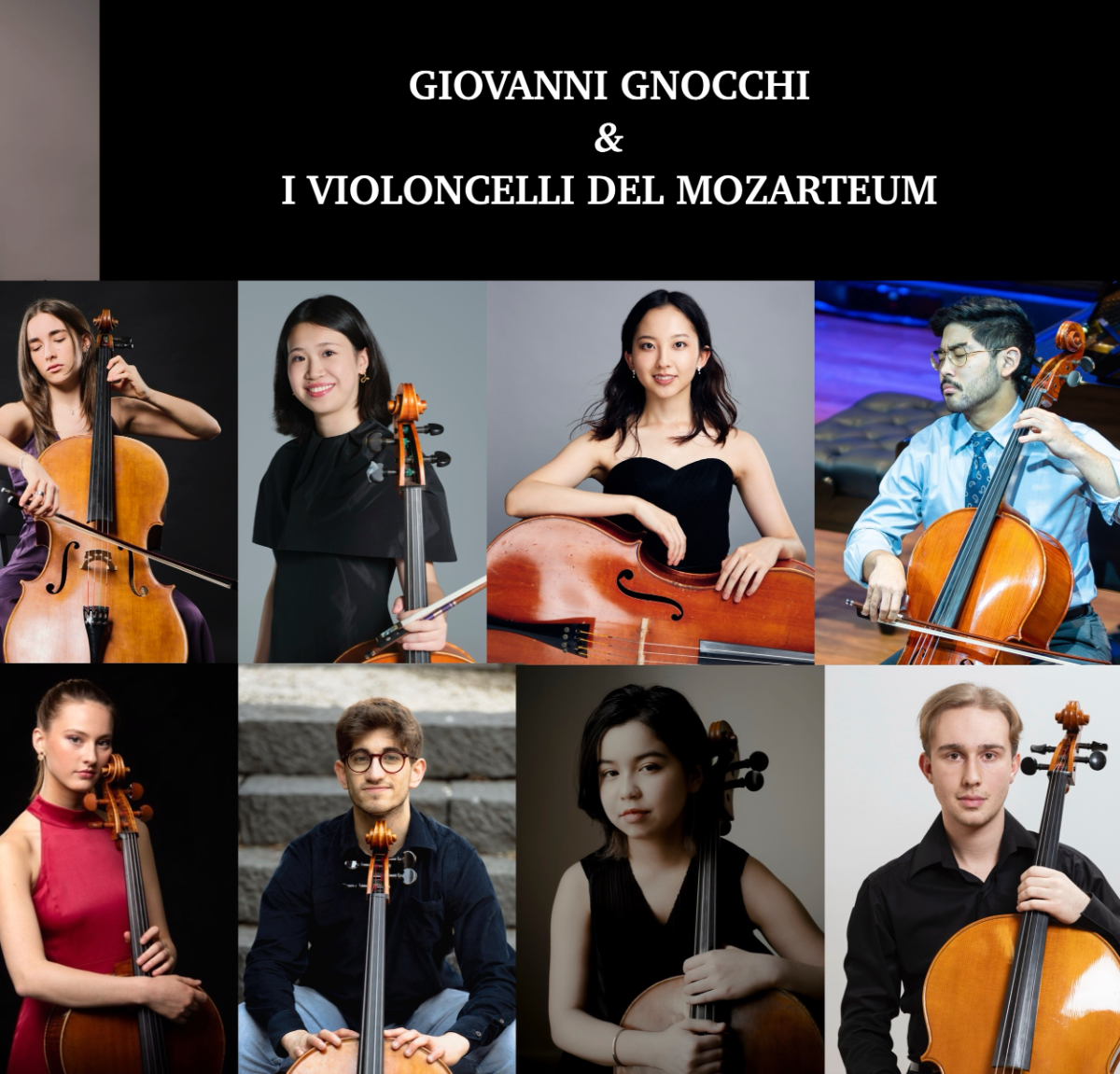
Gnocchi, I violoncelli del Mozarteum

Giovanni Gnocchi, cello
The cellos of the Mozarteum (Alfredo Anastasio, Yhaïs Deefort, Ana Martínez González, Noah Oshiro, Leonard Razboršek, Lynn Renouil-Hata, Keina Satoh, Hai-Qing Yang)
Anonymous (14th century)
La Mantovana. “Fuggi, fuggi, fuggi da questo cielo”
D. Ortiz (c. 1510–1570)
Recercada seconda
O. Respighi (1879–1936)
Antiche arie e danze
W. Fitzenhagen (1848–1890)
Concert-Walzer for four cellos
A. Dvořák (1841–1904)
Slavonic Dance Op. 72 No. 2
G. Keating (1937)
Dance Hall Suite
E. Villani-Côrtes (1930)
Baião!
W. Kaiser-Lindenmann (1940–2010)
Bossa Nova Philharmonica
Mambo!
45’ | Ticket €10
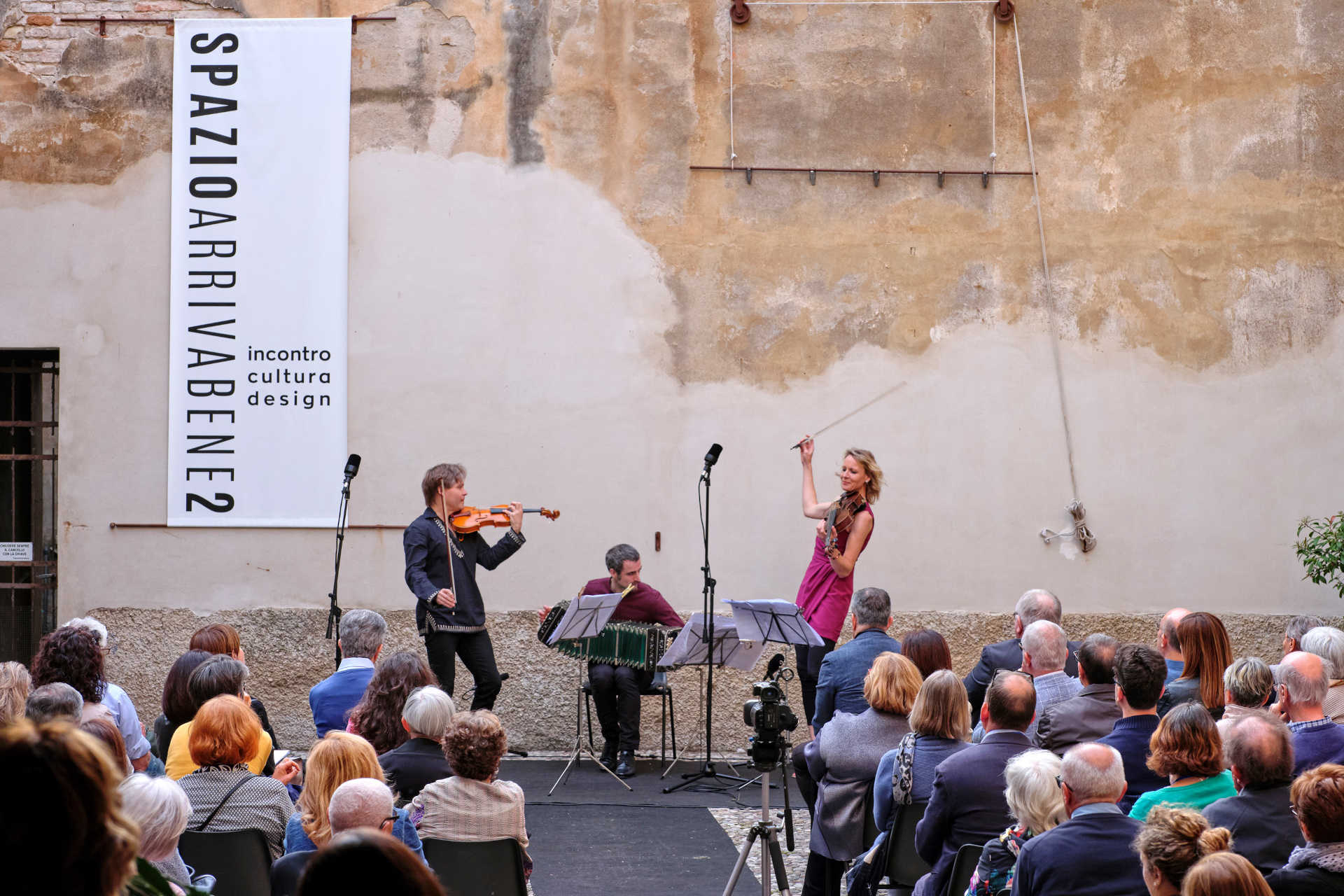
Forget the restraint of the classical concert: tonight, music in Corte Plattis is pure movement. Giovanni Gnocchi and his brilliant Mozarteum students lead the audience on an exhilarating choreographic odyssey across the centuries, rediscovering dance in its most vital essence: that of exchange and shared celebration in the ritual of social encounter.
The invitation to dance begins in the distant past with La Mantovana—a 14th-century folk melody that traveled across Europe—before diving into the refined ornamental writing of Ortiz’s Recercada seconda (1553). The journey continues with Respighi’s Antiche arie e danze (1917–1931), where the past is reinterpreted through refined orchestral writing, here finding a new dimension in the warm timbre of cellos. Fitzenhagen’s Concert-Walzer Op. 31 (c. 1880–1890) highlights the ensemble’s virtuosic brilliance, while Dvořák’s Slavonic Dance Op. 72 No. 2 (1886) channels folk energy into a chamber setting.
The final part of the program enters the 20th century, marking a shift toward dynamic modernity: Keating’s Dance Hall Suite introduces tight, urban rhythms, paving the way for an explosion of cross-cultural sounds. The cellos reveal their most percussive side in the Brazilian warmth of Villani-Côrtes’ Baião! and the flowing grooves of Kaiser-Lindenmann’s Bossa Nova Philharmonica. The closing Mambo! delivers a final surge of energy, proving that in the hands of these musicians, the cello knows no boundaries.
Text by Desirée Blundi
Trame